How Many Blocks in the Great Pyramid? 2.3M May Be a Division
The What-If Observatory Published
The usual answer is about 2.3 million blocks, and the oldest source we found is an 1883 footnote. It reports no count. Flinders Petrie's measurements give about 2.59 million cubic meters, and his average stone of 1.15 cubic meters divides that into about 2.26 million, so we read 2.3 million as a division, which is our inference. Herodotus gives 20 years for the building, and a 2025 preprint models 20 to 27.
Steps in this reading (7)
- Suppose:
- you try to count the Great Pyramid from its measurements.
- Hold fixed:
- Petrie's 1883 base and height; a solid pyramid with no bedrock or chambers inside; one average stone.
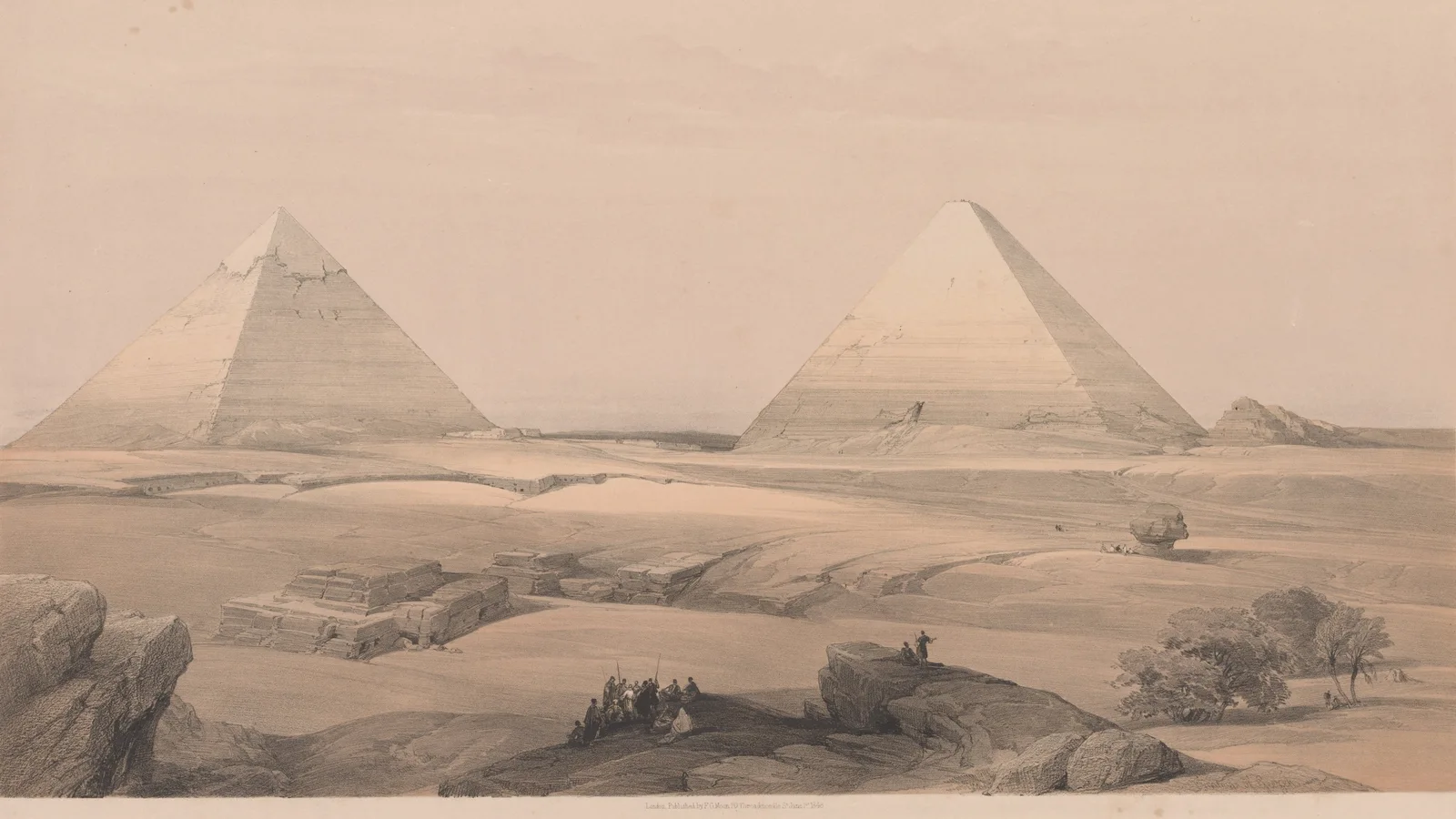
Two of the Giza pyramids, in a color lithograph by Louis Haghe after David Roberts, from the book Egypt and Nubia, issued 1846 to 1849. The plate's imprint reads June 1st 1848.
"Egypt and Nubia: Volume I - No. 3, Pyramids of Gizeh" by Louis Haghe, after David Roberts — https://commons.wikimedia.org/wiki/File:Louis_Haghe_-_Egypt_and_Nubia-_Volume_I_-_No._3,_Pyramids_of_Gizeh_-_1953.526_-_Cleveland_Museum_of_Art.jpg — CC0 1.0 (https://creativecommons.org/publicdomain/zero/1.0/); modified: cropped to 16:9, removing plate margins and the foxed upper sky; imprint line kept

Where does 2.3 million come from?
The oldest statement of it we could read sits at the foot of page 210 in Petrie's The Pyramids and Temples of Gizeh: “The Great Pyramid contained about 2,300,000 stones, averaging 50 × 50 × 28 inches, or 2½ tons each.” Older sources may exist, since we did not read every book on the pyramid.
The footnote says nothing about how he reached the total. Because it describes no tally, we rebuild the figure from his own pages.
Step 1: the outer shape. Petrie gives a mean base of 9,068.8 inches, give or take 0.5, and a height of 5,776.0 inches, give or take 7, worked out from the base and the slope of the faces. That is 230.35 by 146.71 meters. A 2025 preprint by Vicente Luis Rosell Roig gives about 146.6 meters for the height up front and 146.50 in its supplement, both within about 0.2 meters of his.
A pyramid holds base × base × height ÷ 3, which comes to about 2,595,000 cubic meters, and his stated errors move that by about 0.13 percent. This treats the finished building as a true square pyramid at his mean base and mean angle, and it covers the outer shape only, whatever is inside it. Seeing: clear.
That mark is a label borrowed from astronomy, where moving air smears the image of a star, and here it rates how much weight a step can bear.
Step 2: the division. Petrie's average stone, 50 × 50 × 28 inches, is 1.147 cubic meters. Dividing gives 2,262,000 stones, which is 1.6 percent under his total, and running it backward shows that 2.3 million stones need a stone of 1.13 cubic meters.
In the text above that footnote he gives an average block as 40 cubic feet, which is 1.133 cubic meters and divides out to 2,291,000, 0.4 percent under. Seeing: hazy, because one average stands in for stones of many sizes.
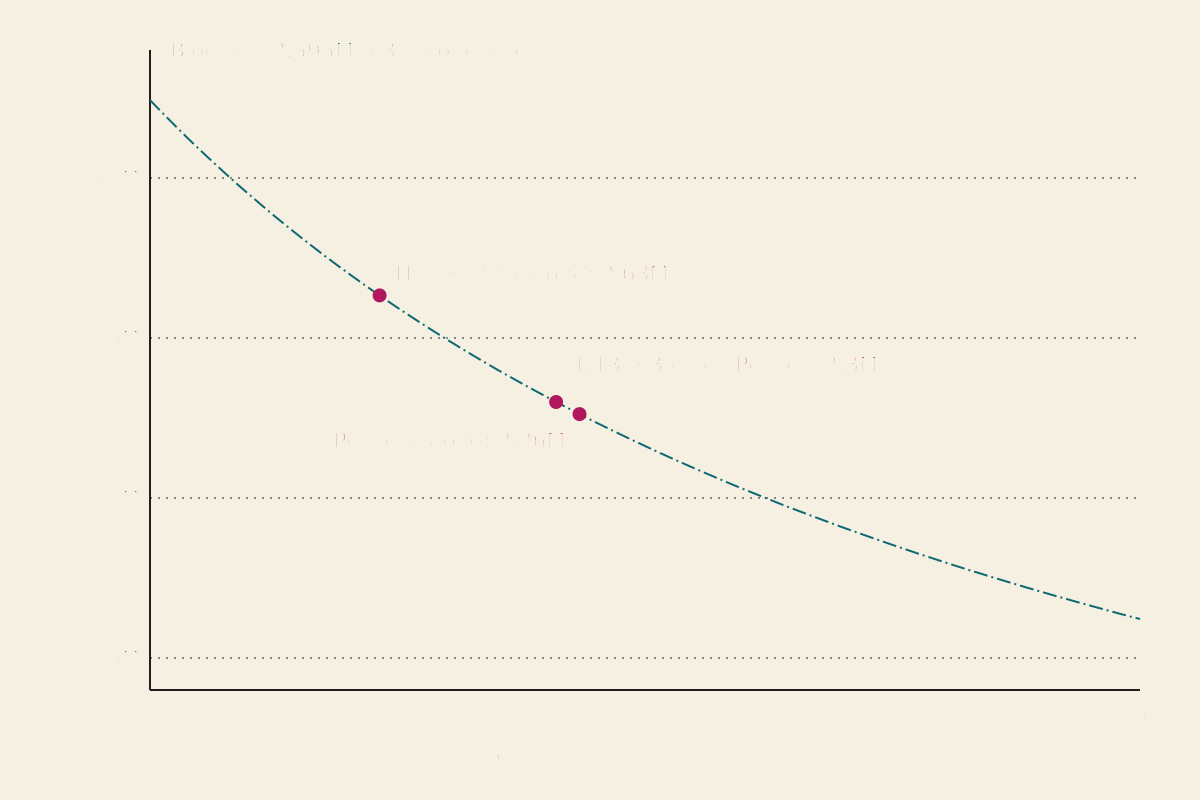
One volume, divided by any stone you choose. Each point on the curve uses Petrie's 2.595 million cubic meters.
"Blocks against the size of one stone" by The What-If Observatory, https://whatifobservatory.com/estimates/great-pyramid-blocks/, licensed under CC BY 4.0 (https://creativecommons.org/licenses/by/4.0/)
Data: Petrie 1883; Hirlimann 2022
That match is why we call the figure a division. The word is ours. Petrie could have reached his average some other way, because a total, an average and a volume are one fact seen three ways, and any two give the third. The footnote shows no sign of a count.
The figure is still in print. The 2025 preprint says the pyramid “comprises ~2.3 million blocks” (p. 1) and cites nothing for it. Its supplement lists an assumed block 1.27 meters square and 0.71 high, which matches Petrie's 50 and 28 inches in metric, though the preprint credits Mark Lehner for its units. The same passage says “The core blocks varied in size and shape and were often irregular.”
How much stone?
About 2.6 million cubic meters. Apart from Herodotus, the sources we read for the outer shape sit within about 4 percent of Petrie.
Step 3: other volumes. A 2023 US Geological Survey column equates 1,000 cubic kilometers with “400,000 Great Pyramids of Giza,” which is 2.5 million cubic meters each, 3.7 percent under Petrie. William Burr's 1903 engineering history says “about 3,500,000 cubic yards,” which is 2.68 million, 3.1 percent over. Burr's own side of 764 feet and height of “over 480 feet,” taken at 480, give 2.64 million, so that figure is a floor. Seeing: hazy.
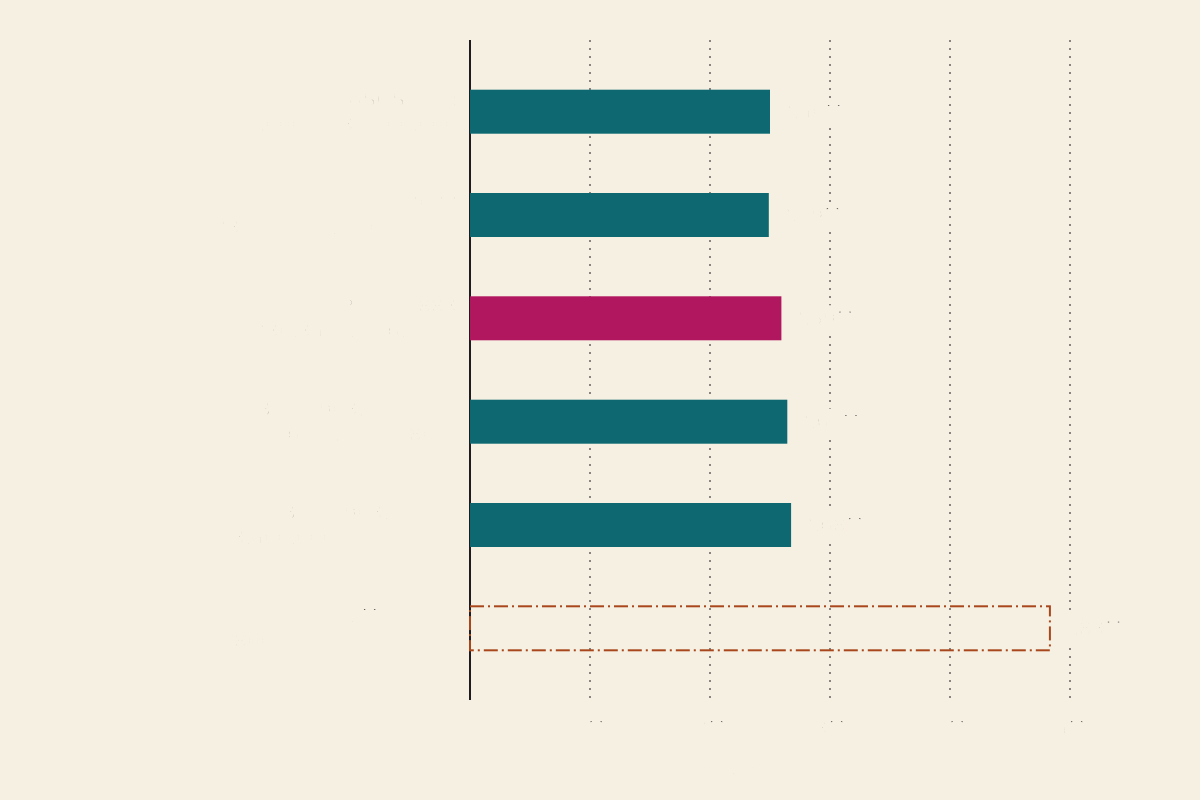
Six volumes for one building. The dashed bar takes Herodotus's 800 feet for both side and height, read as modern English feet, our choice, from Macaulay's translation.
"Volume of the Great Pyramid in six sources" by The What-If Observatory, https://whatifobservatory.com/estimates/great-pyramid-blocks/, licensed under CC BY 4.0 (https://creativecommons.org/licenses/by/4.0/)
Data: Petrie 1883; Hirlimann 2022; USGS 2023; Burr 1903; Herodotus, translated by Macaulay
Herodotus is the outlier, with 800 feet for both the side and the height. Macaulay's translation just says feet. Read as modern English feet, which is our choice, that makes 4.83 million cubic meters, a far taller building than Petrie's figures give.
We use Petrie here because he prints measurements and errors, while two other pages on this site keep the ratio their own source printed, so the numbers differ by design. Our Yellowstone eruption page uses the USGS rate and gets about 975,000 pyramids; at Petrie's volume, that is about 940,000. The ditch on our Atlantis page holds about 3,900 of Burr's pyramids, or about 4,020 of Petrie's. Neither comparison moves as much as 4 percent.
How much does one block weigh?
About 2.5 tons is the figure you will see, but the tons differ, and the number is a model input rather than a weighing. Petrie wrote 2½ tons without saying which ton, Charles Hirlimann's 2022 model uses 2.5 metric tonnes, and the preprint's 2,267.96 kilograms is 2.5 US short tons to the nearest 0.01 kilogram, by our conversion.
Step 4: the weight check. At Hirlimann's density of 2,537 kilograms per cubic meter, Petrie's average stone weighs 2.91 tonnes, not 2½ tons. The preprint's block weighs 2.98 tonnes at the 2,600 kilograms per cubic meter it uses elsewhere, so its size and its mass do not match its own density. Seeing: hazy.
Total weight, by several routes. Burr's nearly 7,000,000 tons appears twice because he does not say which ton he means.
"Total weight of the Great Pyramid by several routes" by The What-If Observatory, https://whatifobservatory.com/estimates/great-pyramid-blocks/, licensed under CC BY 4.0 (https://creativecommons.org/licenses/by/4.0/)
Data: Petrie 1883; Hirlimann 2022; Rosell Roig 2025; Burr 1903
The totals show the same strain, since Petrie's volume at 2,537 gives 6.58 million tonnes, assuming solid limestone. Burr's “nearly 7,000,000 tons” is 6.35 or 7.11 million, depending on the ton. But 2.3 million × 2,267.96 kilograms is only 5.22 million tonnes, about 21 percent under the solid figure. Either the stones are heavier than that, or the limestone is lighter than 2,537, or some of the volume is not stone blocks.
Single stones can run far past any average. Petrie puts a casing stone at some 16 tons, more than six times his figure. Burr says some blocks at the base are 30 feet long, and Herodotus claims no stone was under thirty feet, yet Burr himself says the bulk “is of comparatively small stones.”
Do two roads agree?
Yes, within our rule, though that proves little here. This count meets two-road agreement, our name for two estimates from different main inputs that land within 3 times of each other, unlike our Fermi paradox estimate, where the roads stayed further apart.
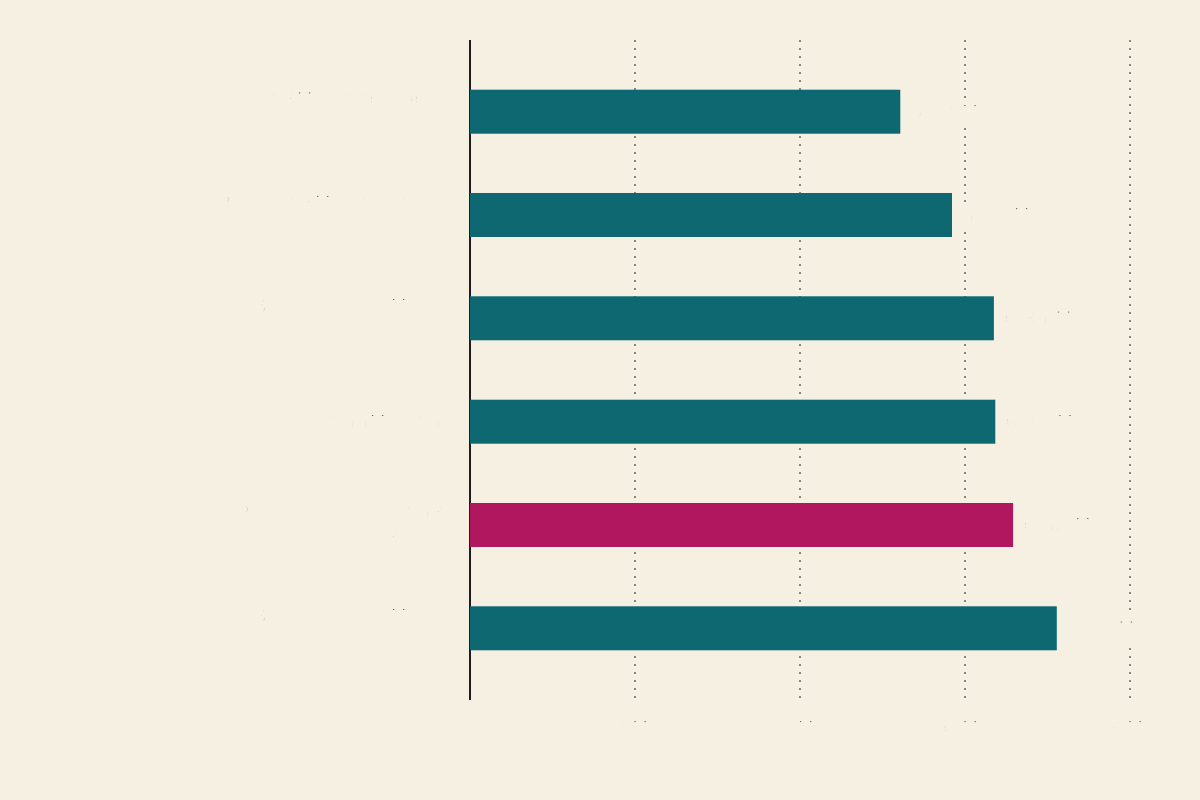
Step 5: a second road. Hirlimann works course by course, dividing each layer's area by the floor area of one model stone, and he takes a 231-meter base, a 140-meter height and 203 courses, each 0.69 meters thick, with a stone of 0.9855 cubic meters. His printed total is 2,546,737, and our rerun of his formula, without rounding each course, lands on the same number. Seeing: hazy.
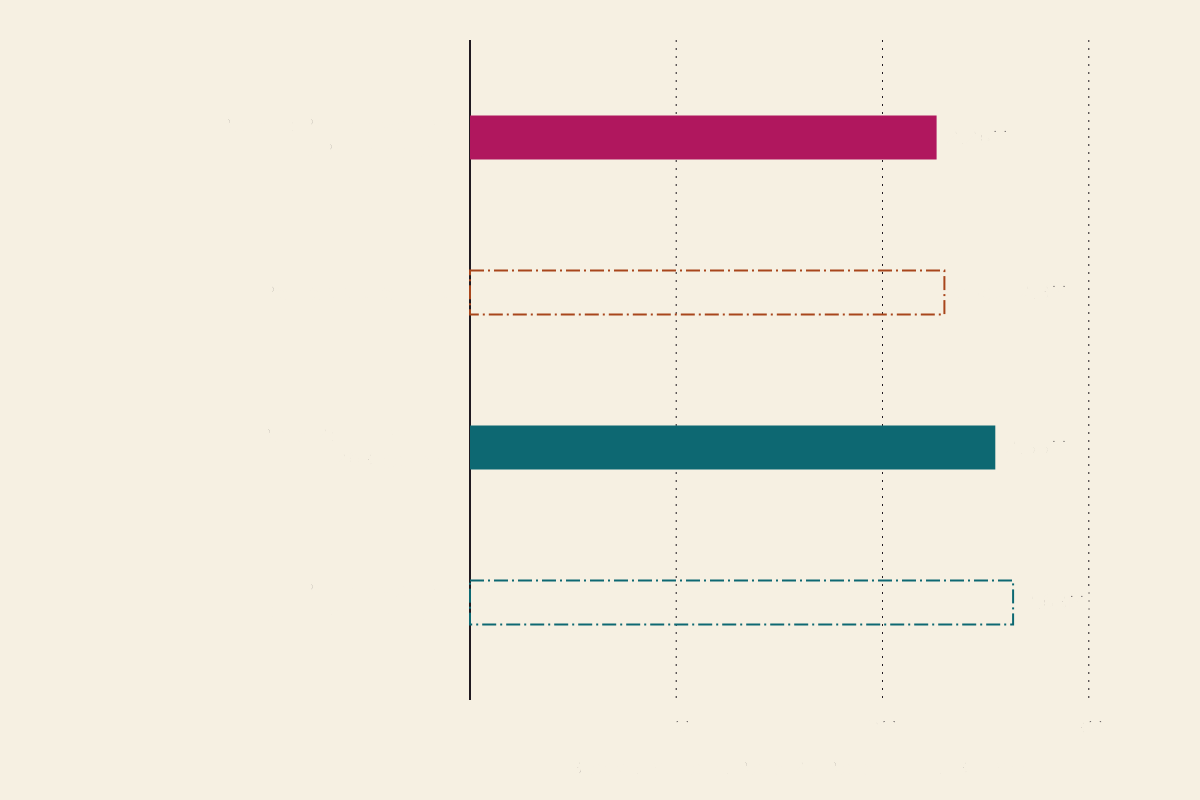
Two roads and Petrie's stated total. The last bar puts Hirlimann's smaller stone on Petrie's volume.
"Two roads to the block count" by The What-If Observatory, https://whatifobservatory.com/estimates/great-pyramid-blocks/, licensed under CC BY 4.0 (https://creativecommons.org/licenses/by/4.0/)
Data: Petrie 1883; Hirlimann 2022
Road 2 lands 1.13 times above Road 1. The smaller stone pushes it up by 16 percent, and the smaller volume his blocks fill, 2,546,737 × 0.9855 or 2.51 million cubic meters, pulls it back by about 3 percent. That stacked figure runs a little over the 2.49 million of his smooth outer shape.
The roads share a lot. Both assume one standard stone and treat the pyramid as solid, and both describe the same shape. Hirlimann himself calls this a “fictitious pyramid,” calls the real average block size “unknown,” and says his total “does not take into account the internal structures of the pyramid, nor the rocky core” (pp. 4, 5 and 8).
Agreement here shows that the two models divide alike. It does not show that anyone counted.
This is a common shape for a large number. Our count of everyone who has ever lived is another total that nobody tallied.
How long did it take to build the pyramids?
Twenty years, says Herodotus, after ten more for the causeway that carried the stone, though he wrote long after the fact, and we read nothing that records the start and end of the work.
Step 6: the pace. Spread 2.3 million stones evenly over 20 years and you get about 315 a day, or one every 1.9 minutes in a 10-hour day. Petrie's own sum supposes 100,000 men, 8 to a stone, with each party bringing 10 stones a season, which gives 125,000 stones a season and 18.4 seasons, his “less than 20 years.”
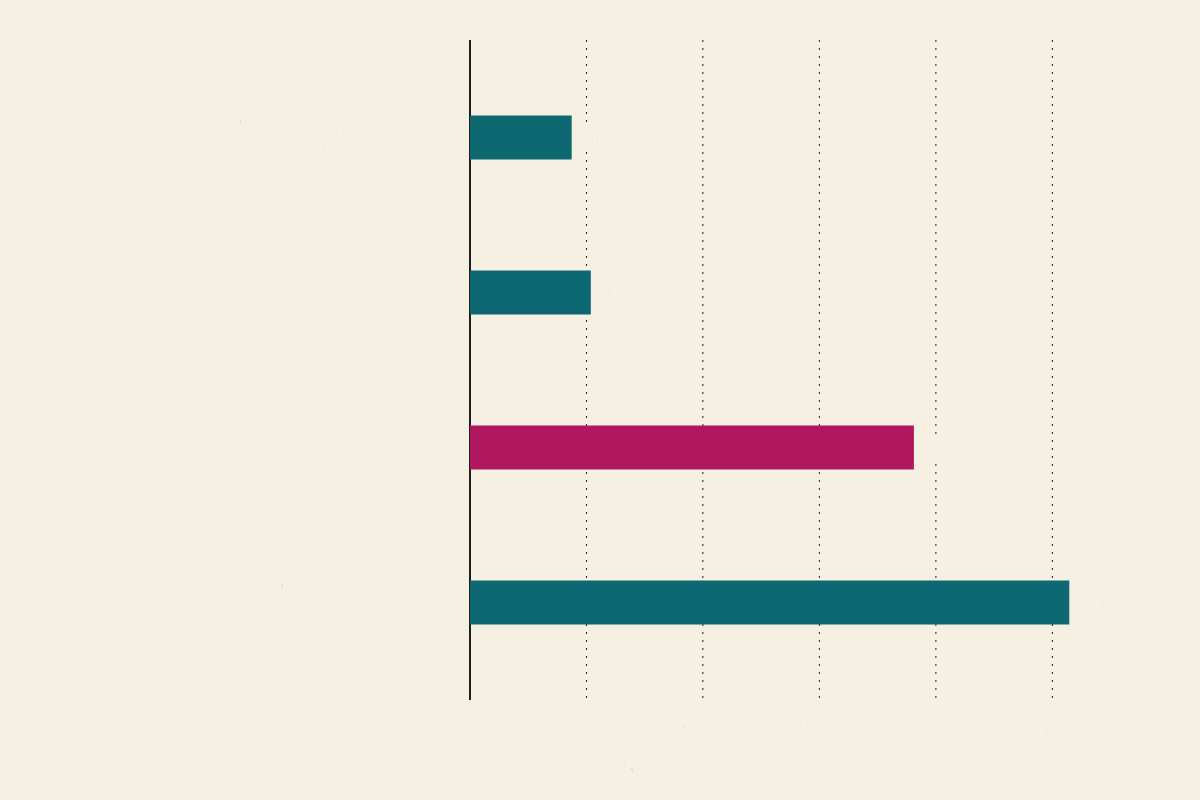
The same work on four calendars in the same 10-hour day: 2.3 million stones for Herodotus's years and the preprint's, Hirlimann's 2.5 million, and Petrie's 125,000 a season.
"Seconds per stone on four calendars" by The What-If Observatory, https://whatifobservatory.com/estimates/great-pyramid-blocks/, licensed under CC BY 4.0 (https://creativecommons.org/licenses/by/4.0/)
Data: Petrie 1883; Hirlimann 2022; Rosell Roig 2025; Herodotus, translated by Macaulay
Squeeze the laying into a season and the pace jumps. Hirlimann's 18 seasons of 120 days need about 1,157 blocks a day, “every 30 seconds or so” (p. 8). Petrie's 125,000 over his three months, which we count as 91 days, means one every 26 seconds in the same 10-hour day. The preprint's 27 years gives about 2.6 minutes in a 10-hour day, and it writes about 3 on its own calendar.
So the choice of calendar moves the pace about 6 times, far more than the 1.13 between our two roads, which means pace tests the calendar and leaves the count untouched. Seeing: hazy.
Who built it, and what do the papyri add?
Herodotus says Cheops “bade all the Egyptians work for him” (Book II), a hundred thousand men at a time, in three-month shifts. Petrie read those months as the Nile flood, when farm work stopped, and Hirlimann makes the same hypothesis about peasants summoned during the flood.
Step 7: the crew and the record. Hirlimann gets at most 1,800 workers a season, counting only the energy to lift the blocks, and warns that this is no total crew. Herodotus's number is about 56 times larger, for a different and vaguer job. The preprint, citing Lehner, gives a rotating workforce of about 20,000 to 30,000 at the Heit el-Ghurab site. Seeing: hazy.
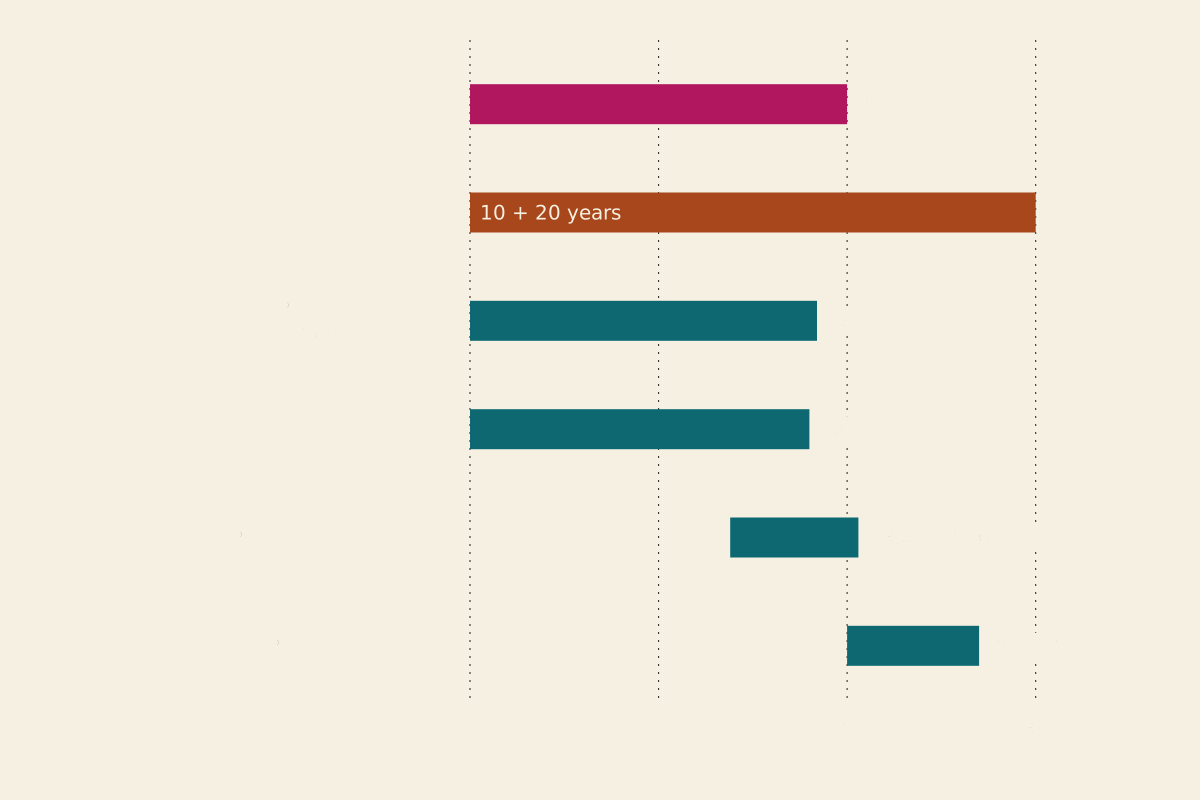
Durations by source. Petrie's 18.4 seasons is our division of 2.3 million by his supposed 125,000 a season; he writes less than 20 years. Seasons and years are not the same unit, and none of these bars is a measured start and end.
"How long the building took, by source" by The What-If Observatory, https://whatifobservatory.com/estimates/great-pyramid-blocks/, licensed under CC BY 4.0 (https://creativecommons.org/licenses/by/4.0/)
Data: Petrie 1883; Hirlimann 2022; Rosell Roig 2025; Herodotus, translated by Macaulay
The Red Sea papyri from Wadi al-Jarf are the ones to name here, and we have not read them, so Pierre Tallet's publication is only a bibliography entry for us. The preprint uses them for a window of about 27 years, batched deliveries and 10-day work cycles, and it models 13.8 to 20.6 years on site and 20 to 27 overall.
That work is still a preprint, and nothing we could read says the papyri hold a block total.
Where it turns to guessing
Everything so far treats the pyramid as solid stone, and it is not. The preprint says a natural bedrock knoll forms “a substantial part of the lower core,” of “order-tens of percent” through about the first 17 courses (p. 19), citing a paper we did not read. It does not turn that into a share of the whole pyramid, and chambers and gaps would take a further bite.
From here on, we are guessing. The table uses test values of our own, not measurements.
| Share of the volume that is not blocks (our test values) | Petrie's stone | Hirlimann's stone |
|---|---|---|
| 0 percent | 2.26 million | 2.63 million |
| 5 percent | 2.15 million | 2.50 million |
| 10 percent | 2.04 million | 2.37 million |
| 20 percent | 1.81 million | 2.11 million |
| 30 percent | 1.58 million | 1.84 million |
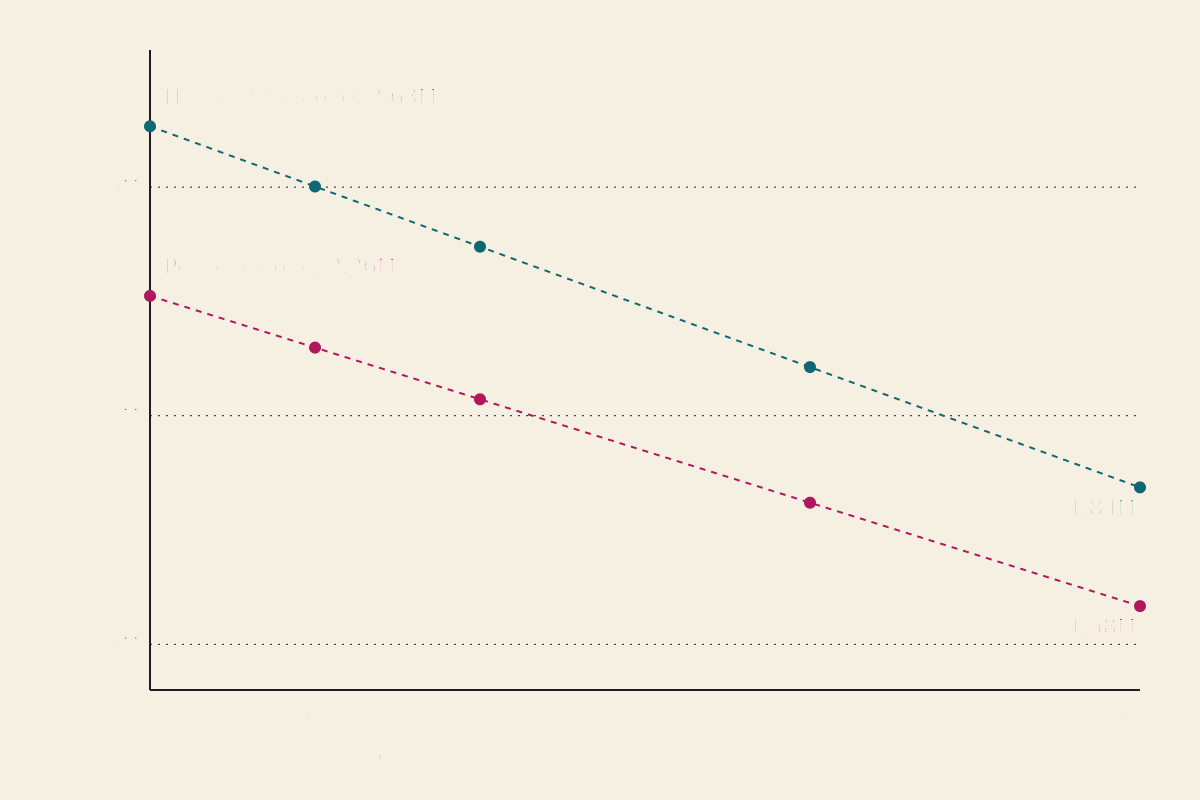
Our test values for how much of the volume is not blocks, with the two stone sizes. Dashed lines mean guessing.
"Blocks if part of the volume is not blocks" by The What-If Observatory, https://whatifobservatory.com/estimates/great-pyramid-blocks/, licensed under CC BY 4.0 (https://creativecommons.org/licenses/by/4.0/)
Data: Petrie 1883; Hirlimann 2022
Step 8: the inside. Together, those rows run from about 1.6 to 2.6 million blocks, and the width of that range comes from our own test values rather than from anything measured. Seeing: overcast.
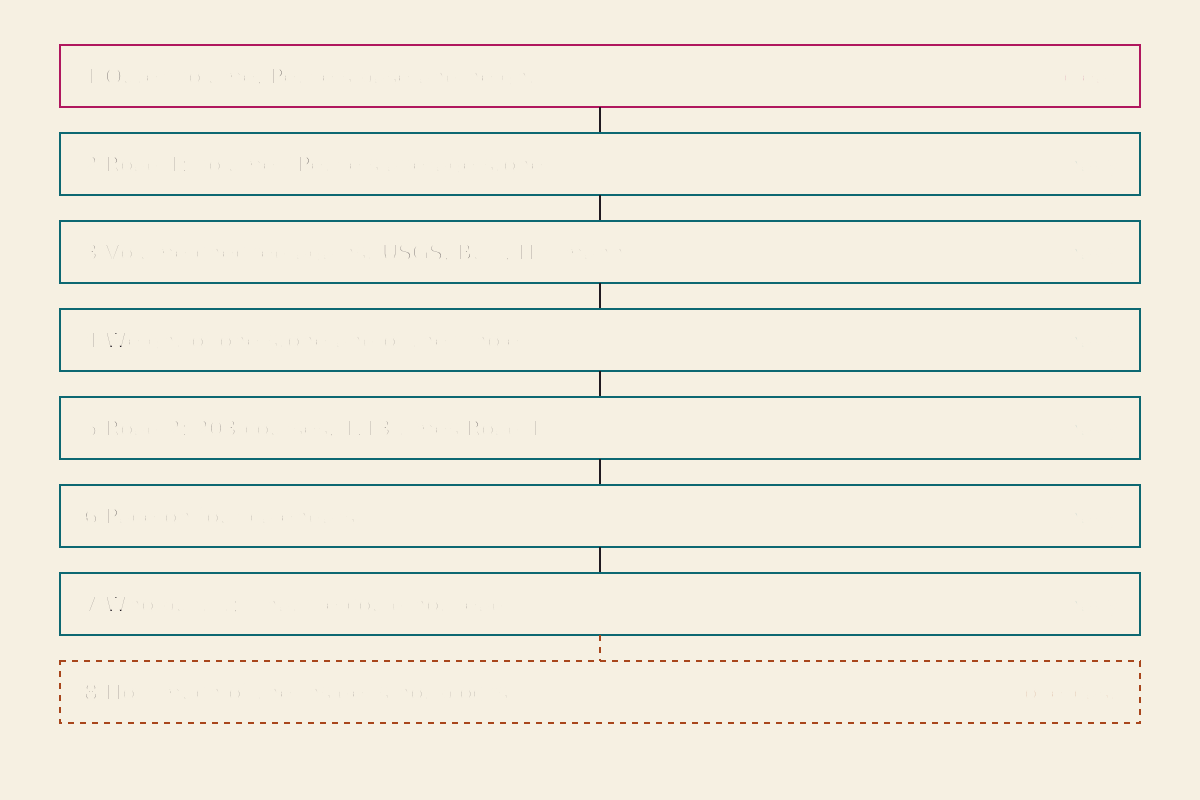
The chain behind this page. Step 1 is clear, steps 2 to 7 are hazy, and step 8 sits past the dotted line.
"The chain of steps behind the block count" by The What-If Observatory, https://whatifobservatory.com/estimates/great-pyramid-blocks/, licensed under CC BY 4.0 (https://creativecommons.org/licenses/by/4.0/)
The dotted line falls after step 7, because the outer volume and the average stone come from printed sources, while how much of the inside is rock, rubble or empty space has no number we could read.
Check my math:
| Step | Input | Value | Unit | Source no. | Source | Recomputed | Seeing |
|---|---|---|---|---|---|---|---|
| 1 | Petrie mean base, 9,068.8 inches | 230.35 | m | 1 | primary | yes | clear |
| 1 | Petrie height, 5,776.0 inches | 146.71 | m | 1 | primary | yes | clear |
| 1 | Outer volume: base × base × height ÷ 3 | 2,594,817 | m³ | 1 | primary | yes | clear |
| 2 | Petrie's average stone, 50 × 50 × 28 inches | 1.147 | m³ | 1 | primary | yes | hazy |
| 2 | Road 1: volume ÷ average stone | 2,262,078 | blocks | 1 | site assumption | yes | hazy |
| 2 | Petrie's stated total, marked “about” | 2,300,000 | stones | 1 | primary | no | hazy |
| 2 | Road 1 under his total | 1.6 | percent | 1 | site assumption | yes | hazy |
| 2 | Stone size that gives exactly 2.3 million | 1.128 | m³ | 1 | site assumption | yes | hazy |
| 2 | Petrie's rounder average, 40 cubic feet | 1.133 | m³ | 1 | primary | yes | hazy |
| 2 | Volume ÷ 40 cubic feet | 2,290,877 | blocks | 1 | site assumption | yes | hazy |
| 3 | USGS rate: 1,000 km³ ÷ 400,000 | 2,500,000 | m³ | 4 | secondary | yes | hazy |
| 3 | Burr: 3,500,000 cubic yards | 2,675,942 | m³ | 5 | secondary | yes | hazy |
| 3 | Burr's own 764 ft side, height over 480 ft, taken at 480 | 2,644,549 | m³ | 5 | secondary | yes | hazy |
| 3 | Hirlimann's 231 m base, 140 m height | 2,490,180 | m³ | 2 | secondary | yes | hazy |
| 3 | Herodotus's 800 ft side and height | 4,832,742 | m³ | 6 | secondary | yes | hazy |
| 3 | Yellowstone page, 975,000 pyramids, at Petrie volume | 939,714 | pyramids | 1, 4 | site assumption | yes | hazy |
| 3 | Atlantis page, 3,900 pyramids, at Petrie volume | 4,018 | pyramids | 1, 5 | site assumption | yes | hazy |
| 4 | Petrie's stone at Hirlimann's 2,537 kg/m³ | 2.91 | tonnes | 1, 2 | site assumption | yes | hazy |
| 4 | Rosell Roig's block mass | 2,267.96 | kg | 3 | secondary | no | hazy |
| 4 | Rosell Roig's block at his 2,600 kg/m³ | 2.98 | tonnes | 3 | site assumption | yes | hazy |
| 4 | Outer volume at 2,537 kg/m³ | 6,583,051 | tonnes | 1, 2 | site assumption | yes | hazy |
| 4 | Burr, nearly 7,000,000 tons, as short tons | 6,350,293 | tonnes | 5 | secondary | yes | hazy |
| 4 | Burr, nearly 7,000,000 tons, as long tons | 7,112,328 | tonnes | 5 | secondary | yes | hazy |
| 4 | 2.3 million blocks × 2,267.96 kg | 5,216,308 | tonnes | 3 | site assumption | yes | hazy |
| 4 | Petrie's 2.3 million × 2½ tons, as long tons | 5,842,270 | tonnes | 1 | site assumption | yes | hazy |
| 4 | Hirlimann's 2,546,737 × 2.5 tonnes | 6,366,842 | tonnes | 2 | site assumption | yes | hazy |
| 5 | Road 2: rerun of the course-by-course sum | 2,546,737 | blocks | 2 | site assumption | yes | hazy |
| 5 | Road 2 as published | 2,546,737 | blocks | 2 | primary | no | hazy |
| 5 | Gap: Road 2 ÷ Road 1 | 1.13 | times | 1, 2 | site assumption | yes | hazy |
| 5 | Volume Hirlimann's blocks fill: 2,546,737 × 0.9855 | 2,509,809 | m³ | 2 | site assumption | yes | hazy |
| 5 | Hirlimann's stone on Petrie's volume | 2,632,995 | blocks | 1, 2 | site assumption | yes | hazy |
| 6 | Petrie's stones per season | 125,000 | stones | 1 | primary | yes | hazy |
| 6 | Seasons for 2.3 million at that rate | 18.4 | seasons | 1 | site assumption | yes | hazy |
| 6 | Herodotus 20 years, every day: stones a day | 315 | stones | 1, 6 | site assumption | yes | hazy |
| 6 | One stone every, in a 10-hour day | 1.9 | minutes | 1, 6 | site assumption | yes | hazy |
| 6 | Petrie season, 91 days: one stone every | 26 | seconds | 1 | site assumption | yes | hazy |
| 6 | Hirlimann, 18 seasons of 120 days: stones a day | 1,157 | blocks | 2 | primary | yes | hazy |
| 6 | One block every, in his 10-hour day | 31 | seconds | 2 | primary | yes | hazy |
| 6 | Rosell Roig, 27 years, in a 10-hour day: one every | 2.57 | minutes | 3 | site assumption | yes | hazy |
| 7 | Herodotus's 100,000 ÷ Hirlimann's 1,800 | 56 | times | 2, 6 | site assumption | yes | hazy |
| 8 | Blocks if 30 percent is not blocks, Petrie stone | 1,583,454 | blocks | 1 | site assumption | yes | overcast |
| 8 | Blocks if none is, Hirlimann stone | 2,632,995 | blocks | 1, 2 | site assumption | yes | overcast |
Download great-pyramid-check-my-math.csv (where its values come from)
Download great-pyramid-scenarios.csv (where its values come from)
One number changed, the size of the stone, with Petrie's volume and a solid pyramid held fixed:
| Stone | Size | Blocks in 2.595 million m³ |
|---|---|---|
| Rosell Roig's 2,267.96 kg at his 2,600 kg/m³ | 0.872 m³ | 2.97 million |
| Hirlimann's model stone | 0.9855 m³ | 2.63 million |
| The size that gives exactly 2.3 million | 1.128 m³ | 2.30 million |
| Petrie's average stone | 1.147 m³ | 2.26 million |
| A larger stone, our test value | 1.500 m³ | 1.73 million |
| Every stone like Burr's base blocks, 30 × 5 × 4 ft (he writes 4 or 5 for the last; we take 4) | 16.990 m³ | 153,000 |
Inches convert at 0.0254 meters and cubic yards at 0.7645549 cubic meters. Units were checked, and the computed numbers in the text were compared with the CSV.
Next question:
- How many people have ever lived? Everyone ever born, counted two ways
- What if Plato's ditch were real? Atlantis, by the cubic yard
Sources
- W. M. Flinders Petrie. The Pyramids and Temples of Gizeh. London: Field & Tuer, 1883. Original Read: full pages 43, 44 and 210; other chapters searched for the figure.
- Charles Hirlimann (2022). “The gravitational potential energy of the Great Pyramid.” arXiv:2201.00525v2. Original Read: full text of the arXiv version. Text license: CC BY 4.0.
- Vicente Luis Rosell Roig (2025). “A computational framework for evaluating an edge-integrated, multi-ramp construction model of the Great Pyramid of Giza.” Preprint, arXiv:2511.06112. Original Read: preprint and supplement, the passages on geometry, block parameters and timeline; under peer review when read. Text license: CC BY 4.0.
- Yellowstone Volcano Observatory. “In the pantheon of caldera eruptions, where does Yellowstone rank?” Yellowstone Caldera Chronicles, U.S. Geological Survey, July 3, 2023. Original Read: full column, last read 2026-11-08.
- William H. Burr. Ancient and Modern Engineering and the Isthmian Canal. J. Wiley & Sons, 1903. Project Gutenberg eBook 75910. Original Read: section on the pyramids.
- Herodotus. An Account of Egypt (from the Histories, Book 2). Translated by G. C. Macaulay. Project Gutenberg eBook 2131. Original Read: chapter on Cheops and the pyramid.
- Pierre Tallet. “The Red Sea Papyri (Wadi el-Jarf): New texts and new research perspectives” (in French). Bulletin de l'Institut français d'archéologie orientale 121 (2021): 403–424. Original Read: bibliography only; reported through Rosell Roig 2025.
Cite this page
The What-If Observatory. "How Many Blocks in the Great Pyramid? 2.3M May Be a Division." Published 2026-11-09. https://whatifobservatory.com/estimates/great-pyramid-blocks/. Add the date you read it.
Corrections
None so far.